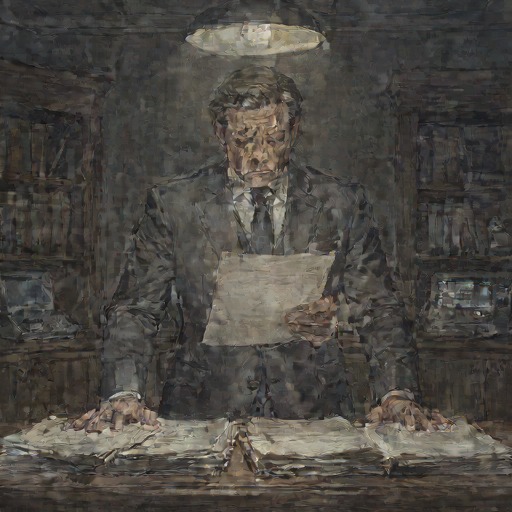
Renewal Centre Intellectual Property Transfer
Unchosen By My CEO Husband: A Marriage In Crisis Second Chance RomanceThe Renewal Centre Intellectual Property Transfer is the formal, irrevocable handover of every Renewal Centre design file, plan, and piece of intellectual property held by the Colt Foundation to Haven House Recovery Gardens. Aaron Colt initiates it after recognizing that Jacinta Colt’s work was erased from the project and after rejecting a later offer that would have repeated the same erasure under a more respectable corporate arrangement. The transfer matters because it gives Jacinta back not merely credit, but legal control over the work that originated with her and removes Aaron’s ability to turn restitution into another condition of their marriage.
Causes and Background
The transfer grows out of the Renewal Centre’s creation and the unequal labor surrounding it. Jacinta had developed the recovery and wellness facility over three years, from an initial sketch on a takeout menu through final board approval. At home, her planning labor is represented by labeled bins, a four-color whiteboard calendar, and routines so reliable that no one in the household has missed a dentist appointment since 2019. That competence makes the household appear effortless, while concealing the continuous work required to keep it functioning. The same pattern governs the Renewal Centre: Jacinta builds the structure, but the institution and her husband can present the result without naming its architect.
The immediate conflict concerns more than a mistaken label. Jacinta identifies the omission of her name as erasure after Cassandra Vale moves her walkthrough and tells others that Jacinta is overwhelmed or having an episode. Aaron Colt understands the commercial danger but initially treats the problem as something to postpone. He argues that the venue alone is worth two hundred thousand dollars and that he cannot fight the Vale family during the week of the gala. His gentle suggestion that Jacinta rest and let Cassandra’s team handle logistics converts a question of authorship into a question of Jacinta’s supposed instability, while leaving the existing power arrangement intact.
Aaron’s silence is also shaped by his fear of exposure. When Cassandra appears at his hotel room, Jacinta calls security, but Aaron deletes the message he begins composing because he imagines what a phone call from the Vale family could do to the unsigned venue contract, the gala, and everything Jacinta has built. He tells himself that withholding the information protects her. In practice, the omission protects the project’s commercial arrangements at the cost of Jacinta’s safety, agency, and public standing.
The Decision to Transfer
Aaron’s later recognition begins when he stops treating the marriage and its promises as fixed assets. In therapy, he explains that at the gala he calculated the venue, the contract, and the exposure, though the actual calculation was a feeling that standing up would cost more than sitting down. Dr. Feld identifies his apparent apology as another transaction: she tells him to stop buying Jacinta things because he is not apologizing to his wife but tendering an offer. That distinction separates material repair from gifts intended to substitute for changed conduct.
The failed flowers make the point concrete. Nine days after Jacinta leaves with the children and drives north, Aaron sends two hundred stems of white peonies to Haven House, relying on the florist’s claim that peonies signify apology. The flowers return two days later, not simply rejected but repurposed. The gesture cannot repair the structure that made Jacinta’s authorship disposable, and it cannot purchase her return.
The decisive test arrives when Meridian Health offers six million dollars to fund and nationally expand the Recovery Gardens. The proposal would retain Jacinta only as a senior consultant, launch the program under the Meridian name, and simultaneously support Aaron for chairman. Its logic is explicit: Jacinta’s ideas can be used while her name is removed, and Aaron can recover authority by presenting himself as the stable founder. Aaron rejects the offer because it would erase Jacinta from a second project. He describes the arrangement as the same theft with a better tailor, refusing both the money and the chairmanship attached to it.
Terms and Execution
That rejection leads directly to the transfer. Aaron has his lawyers prepare documents assigning every Renewal Centre design file, plan, and fragment of intellectual property ever touched by the foundation to Haven House Recovery Gardens. The assignment is irrevocable, contains no conditions, and includes no reversion clause. Elliot Grant witnesses the signatures and reads the documents three times, emphasizing the seriousness of a transfer designed to prevent later bargaining or concealed recapture.
The legal structure is crucial. Earlier, Aaron’s silence had protected an asset-specific venue arrangement: the project depended on a particular contract, and that dependence made him willing to tolerate the Vale family’s control. The new documents reverse that logic. Instead of retaining leverage through ownership, secrecy, or marital access, Aaron relinquishes the institutional property in a form that cannot be used to compel Jacinta’s reconciliation. The transfer therefore functions as a governance change as much as a financial or legal act.
Aaron also accompanies the transfer with public accountability. He releases the security log and the registration information for the email account created in a form nearly identical to Jacinta Colt’s name, tracing it through a vendor on the Vale events payroll. He issues a statement identifying Jacinta by name as the actual designer of the Renewal Centre and admits that three years of her work were erased by his family and enabled by him. The intellectual property documents restore control; the statement restores the public record. Neither is presented as proof that Jacinta must return to the marriage.
Jacinta’s Receipt and the Event’s Consequences
Jacinta receives the papers at the kitchen table while making bread with Theo Colt. The setting contrasts the abstract language of institutional ownership with the ordinary labor of her new life at Haven House. She finds the Renewal Centre files, her drawings, and her plans—three years of work the foundation had held like collateral. She reads the documents twice, searching for a hidden condition, a hook, or the smallest clause that might return control to Aaron.
There is no such clause. The absence is the event’s most important concrete result. The files are transferred to Haven House Recovery Gardens irrevocably and without conditions, so Jacinta is not being offered temporary access, a consulting role, or credit dependent on Aaron’s continued approval. A note in Aaron’s handwriting says that the work was never his to return and was instead his to stop holding; it belongs to Jacinta regardless. The wording acknowledges that restitution cannot transform stolen ownership into a favor.
The transfer does not settle the marriage. Aaron knows that Jacinta has not decided what she wants from him, and the documents deliberately leave that decision outside the transaction. Their separation, the damage caused by the Vale family’s manipulation, and the years in which Jacinta’s labor was absorbed into the identity of the Colt household remain unresolved by a signature alone. What changes is the material basis on which any future relationship might be considered: Jacinta no longer has to negotiate for possession of her own work.
Significance
The event is a turning point from apology as performance to repair as surrender of power. Aaron had previously measured loyalty through the language of cost, treating Jacinta as an asset expected to remain because leaving would be expensive. The transfer reverses that arrangement by imposing a real cost on him without demanding an emotional return from her. It also clarifies why the earlier gala conflict cannot be reduced to a typo or a marital misunderstanding: the central injury was the conversion of a woman’s sustained creative and organizational labor into institutional value without her name.
The transfer therefore joins personal accountability to structural change. Public disclosure names the harm, the legal assignment changes ownership, and the absence of conditions prevents restitution from becoming another instrument of control. In the wider reconstruction of the Colt family’s institutions, it anticipates the principle that everyone receives credit and everyone is audited. Jacinta’s work is no longer collateral held by a foundation, a family, or a husband; it becomes the foundation of Haven House Recovery Gardens under her own authority. The event’s final ethical force lies in its restraint: Aaron can return what was never his, but Jacinta alone determines what, if anything, is returned between them.